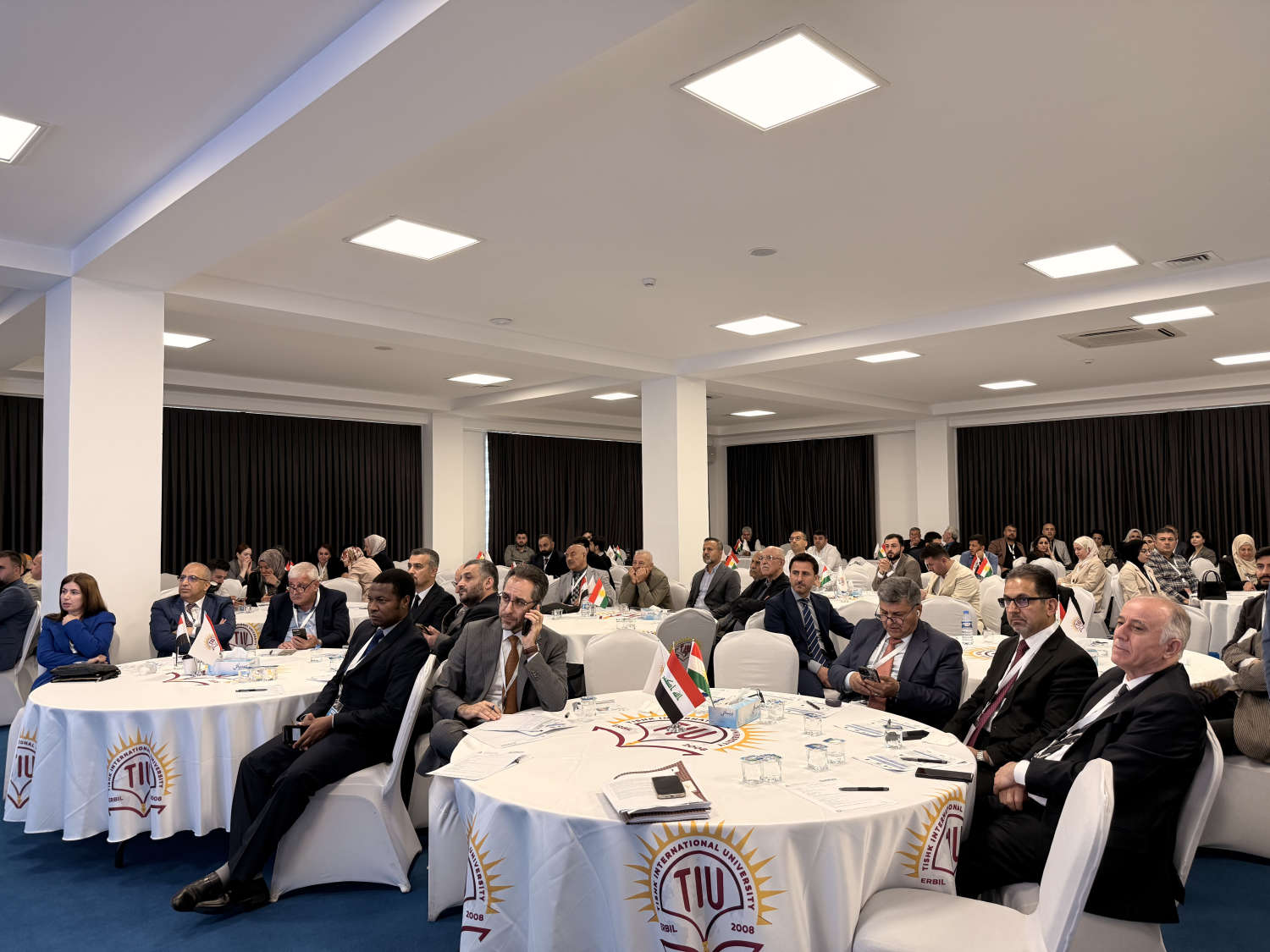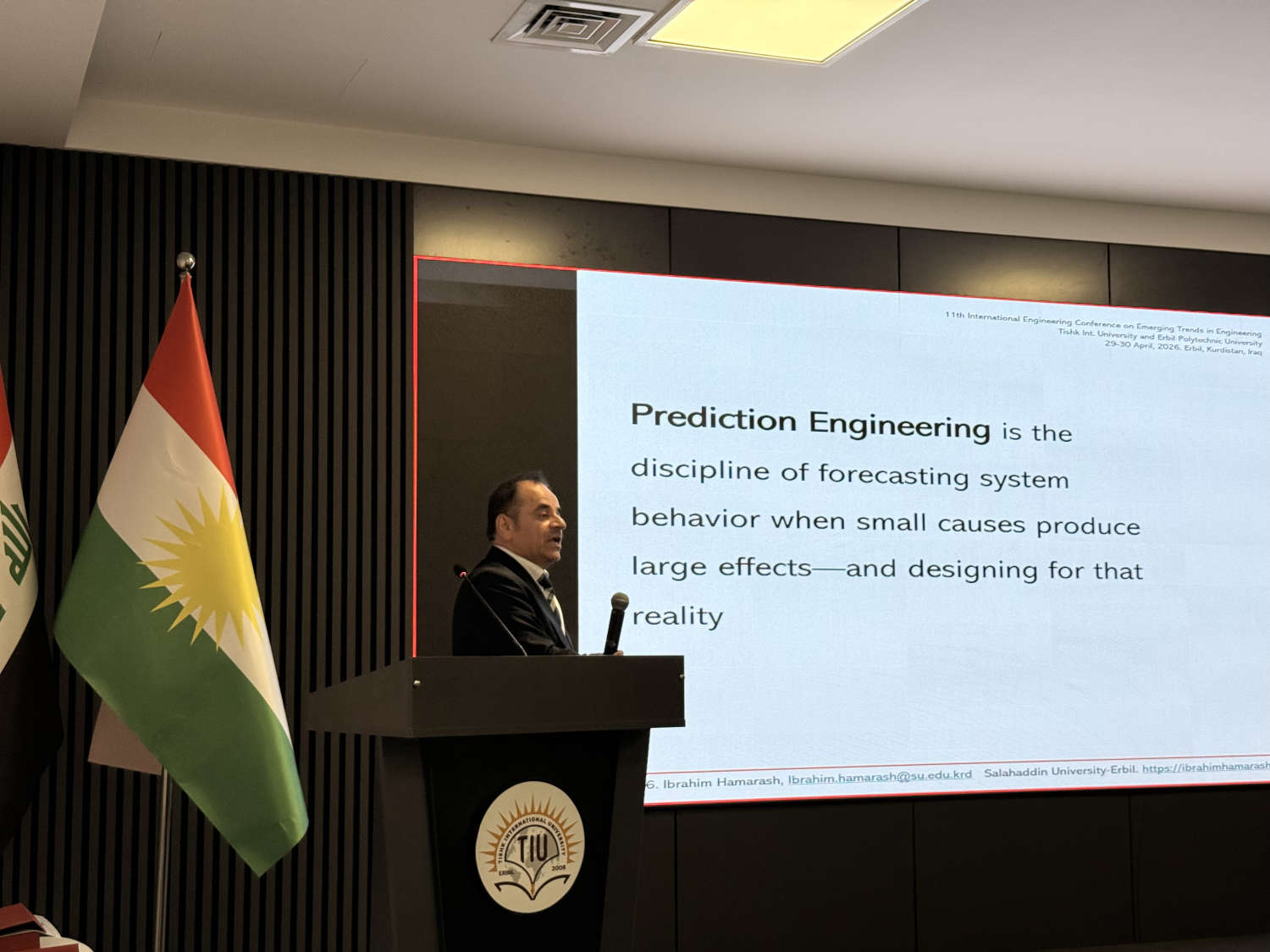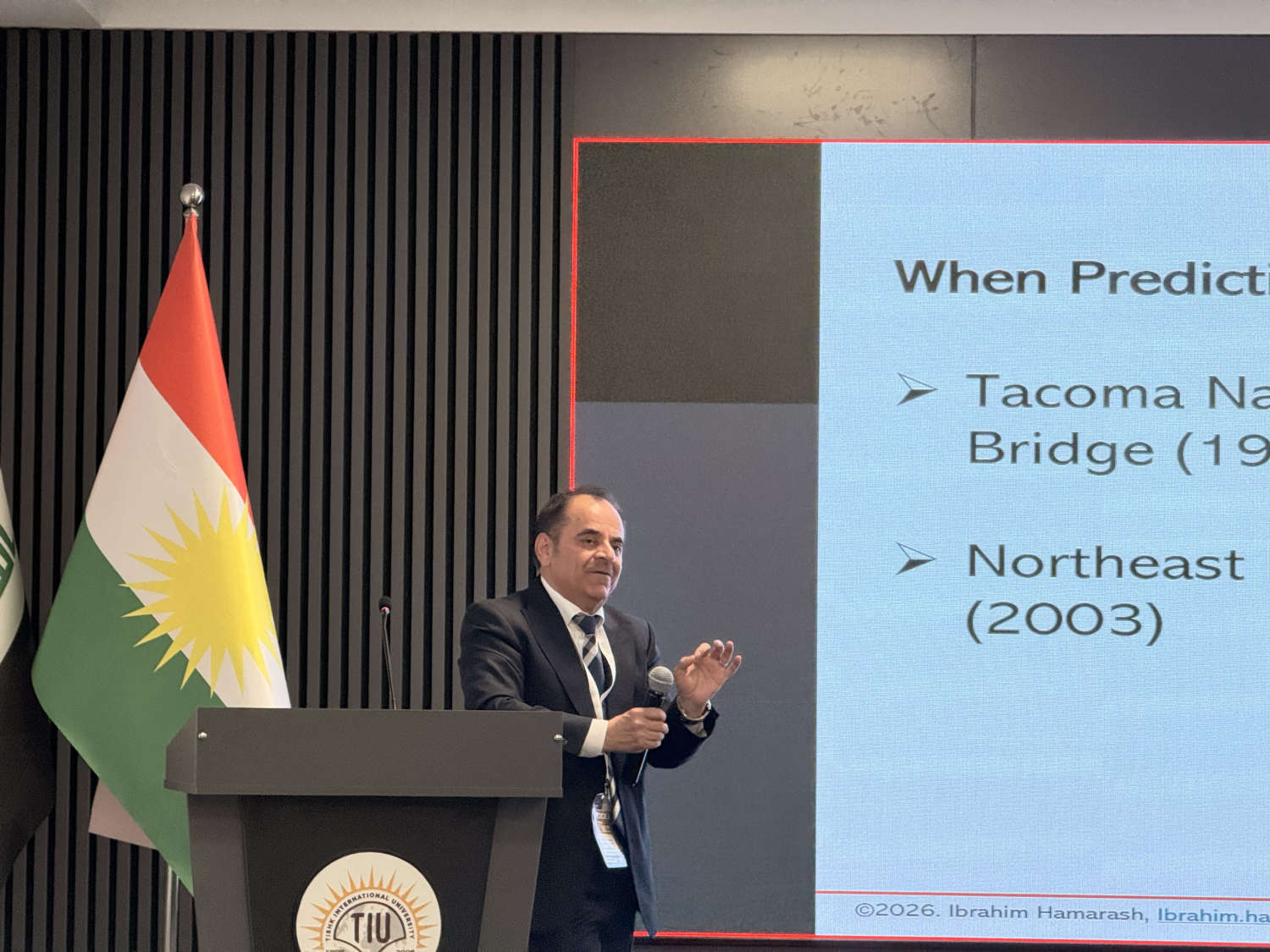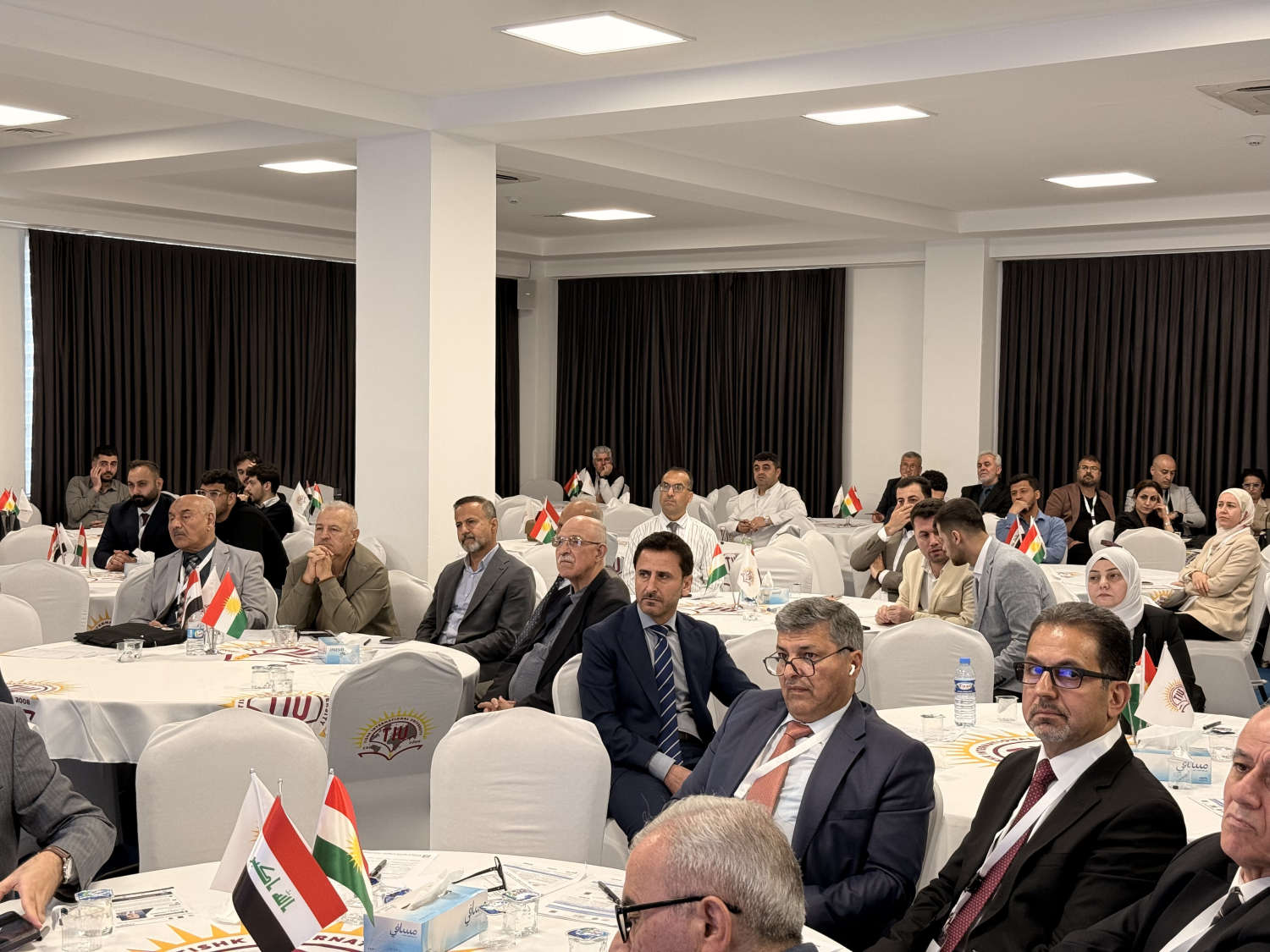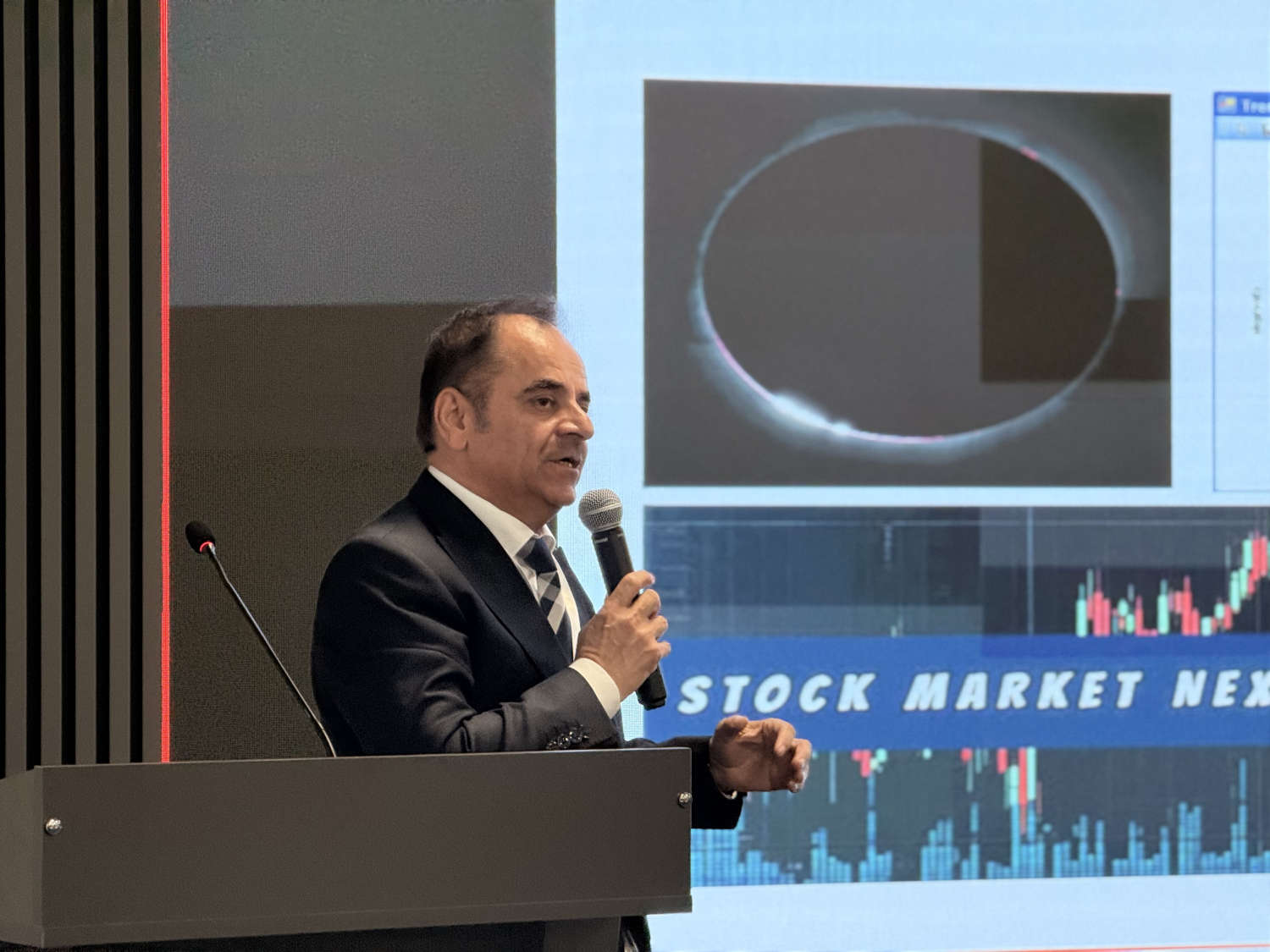
On April 29, 2026, the Computer Engineering Department at Tishk International University hosted a national workshop titled “When Systems Speak: Chaos, Complexity and The Future of Engineering“. Held in the Ibn Sina Hall (Room 400), the event brought together 40 students and lecturers to explore the shift from traditional linear models to the unpredictable world of nonlinear dynamics. The workshop was led by Prof. Dr. Ibrahim Hamarash from Salahaddin University-Erbil, who challenged the conventional engineering mindset of fighting against uncertainty. At the heart of his presentation was the provocative idea that chaos is not a state of disorder, but rather a deeper, more complex form of order that engineers must learn to interpret.
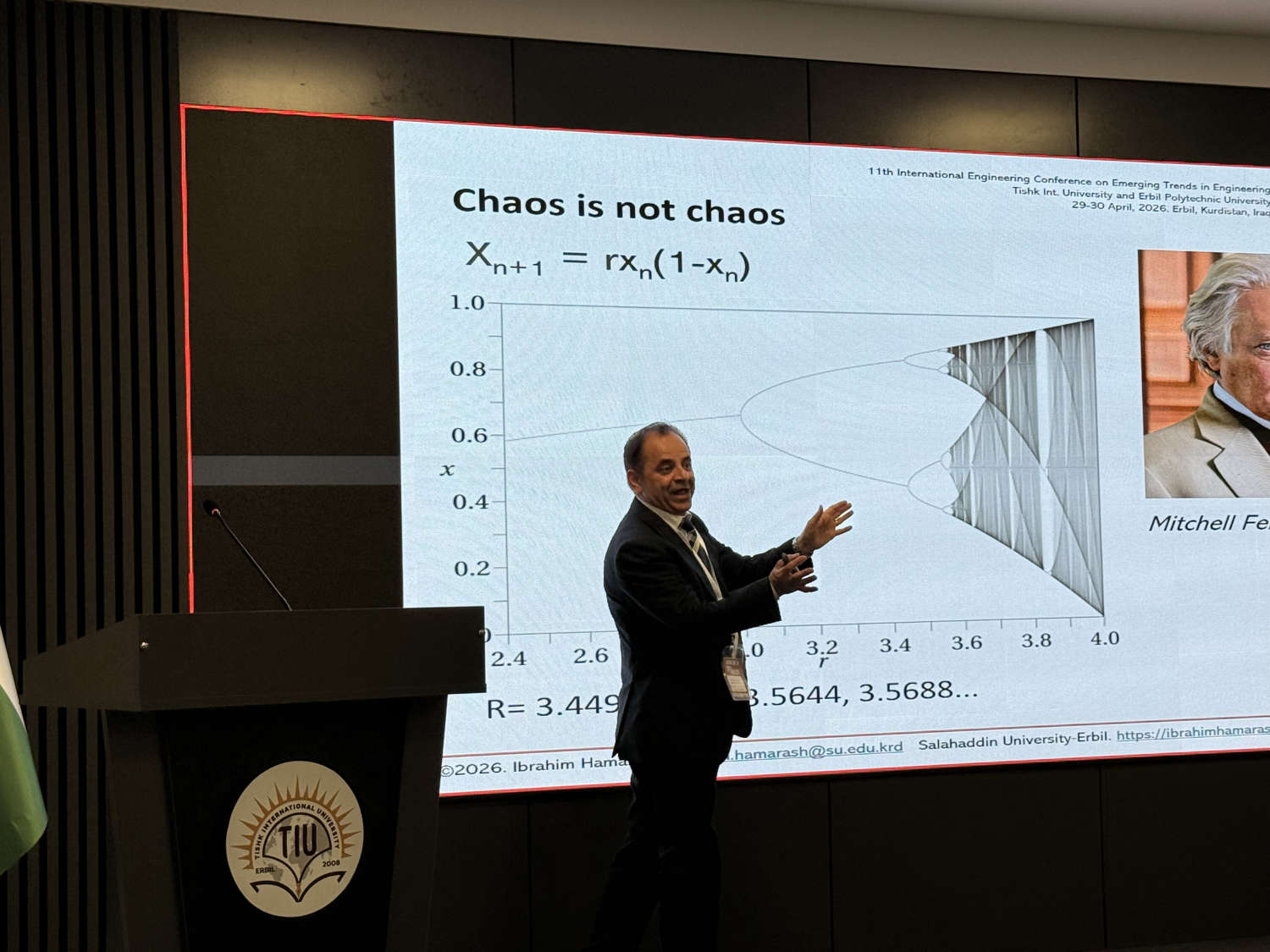
The core of the workshop focused on the evolution of engineering disciplines. While classical engineering often relies on predictable, linear models, the modern era demands a transition toward Prediction Engineering. This field acknowledges that “chaos” is not a synonym for disorder, but is instead a deeper, more complex form of order that engineers must learn to interpret. The sessions covered a broad spectrum of theoretical and practical engineering challenges, including The Evolution of Engineering. Moving from the structural simplicity of bridges to the complex world of Prediction Engineering. Also The Limits of Prediction, Analyzing historical failures such as the Tacoma Narrows Bridge collapse and the Northeast Blackout to understand where traditional models fall short. These historical precedents set the stage for exploring the work of Edward Norton Lorenz and the Butterfly Effect, illustrating how minuscule changes in initial conditions can result in vast, unexpected outcomes. The discussion further expanded into the mathematical constants of chaos defined by Mitchell Feigenbaum, showing that even the most complex systems have underlying patterns.
The theoretical portion of the day culminated in a practical case study regarding nonlinear dynamics in concrete cracking. This specific example highlighted the inherent failure of linear models to accurately predict how materials behave under stress, reinforcing the need for a more nuanced engineering perspective. By the end of the workshop, the intended outcome was clear: participants left with a shifted perspective, recognizing that acknowledging small causes can produce large effects is essential for forecasting system behaviors and designing for the reality of the modern world.